笔记 /
这篇文章尚未翻译,因此以英文原文显示。
I had the answer somewhere in 200 documents
It is 4:42 p.m., and the answer is definitely on your computer.
Maybe it is a renewal clause in an old contract, a requirement buried in a proposal, or the name of the method described in a research paper. Windows search has found 47 files containing one of the words. Six PDFs are scans. Two folders are named “final,” and neither one is.
The problem is not that the information is unavailable. The problem is that you remember its meaning but not the exact phrase, filename, or year.
That is a common kind of work for consultants, researchers, students, project managers, and anyone whose useful knowledge arrived as attachments instead of neat notes. A chat attachment helps when you already know which file matters. It does not help when finding the file is the task.
Add the documents once, then ask normally
DT Life’s Library is a long-term, local collection of files the twin is allowed to know. Add PDFs, Word documents, spreadsheets, presentations, text files, or images and scans. A file already attached in a Talk session can also be saved to the Library instead of added again.
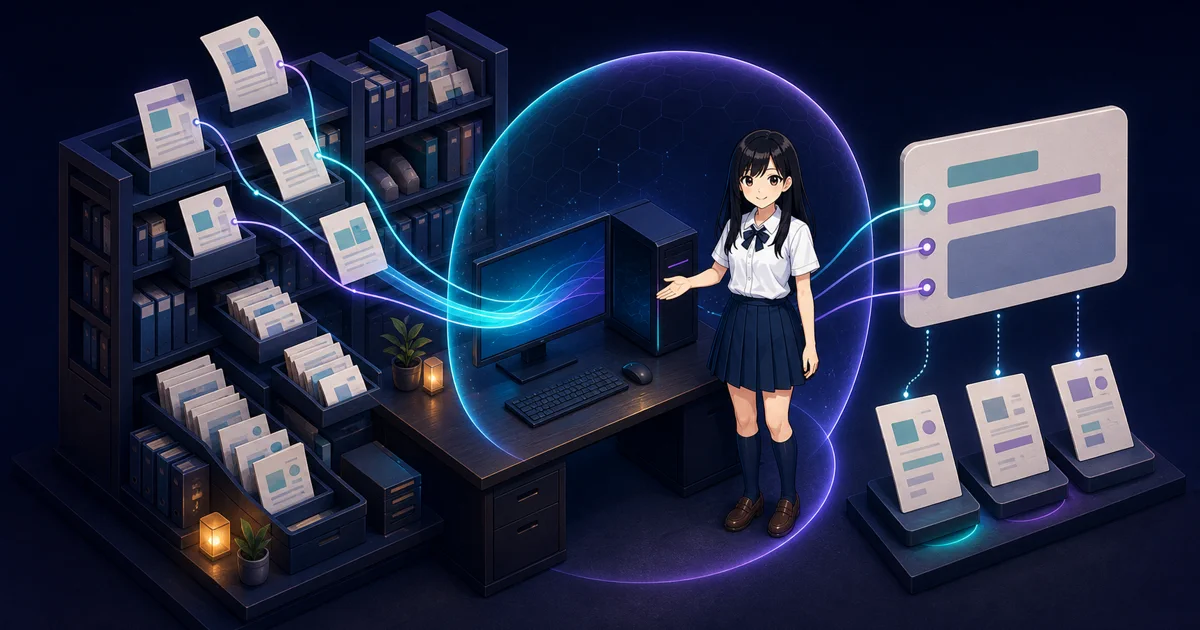
The app reads each file on your device. Ordinary PDF and Office text is extracted directly. Scanned PDFs and images go through local OCR. The resulting text is split into overlapping passages, and a small sentence-embedding model turns those passages into vectors stored alongside the text in SQLite.
That last step is what lets you ask by meaning instead of by exact wording. A question such as “What did the vendor promise about data deletion?” can match a passage that says “records will be removed within thirty days,” even though the question and source do not share the obvious search phrase.
You ask in Talk as you would ask any other question. When Library passages are genuinely relevant, DT Life places them into the local model’s context. The reply cites the file by name and shows source cards marked your library. When the question has nothing to do with a saved document, the Library stays out of the answer instead of forcing unrelated excerpts into every chat.
The citation is as important as the answer. It turns “the AI says the contract allows it” into “the answer came from this file, which I can now open and verify.” Retrieval should shorten the path to evidence, not replace the evidence.
Your archive does not become someone else’s dataset
Document libraries tend to contain the exact material people hesitate to paste into a cloud chatbot: client agreements, unpublished work, financial records, health documents, job-search material, and years of internal notes.
Here, extraction, OCR, embedding, search, and answer generation happen on the computer. The extracted text and passage vectors remain in DT Life’s local database, with private text encrypted at rest. The original file is never uploaded by the Library.
Removing a Library item deletes its extracted text and vectors together. It does not delete the original document from your folder; those are two separate decisions, and an assistant should not confuse them.
The embedding and OCR models may need to download during initial setup or first use. Once those model files are present, the document pipeline can run without an internet connection. That setup distinction matters on a product described as offline.
A source card is not a guarantee
OCR can misread a faded scan. Columns in a complicated PDF can be extracted in the wrong order. Semantic search can miss a passage, especially when the question is vague or the document uses highly specialised language. A small local model can also summarise retrieved text incorrectly.
The current citation identifies the source file; it is not a certified legal reference or a guarantee that every relevant passage was found. For a contract, medical record, academic quotation, or any decision with real consequences, open the cited file and check the original wording.
That limitation does not make the Library pointless. It gives it the right job. Instead of pretending to be the final authority, it helps you cross two hundred documents and land close to the page that deserves your attention.