노트 /
이 글은 아직 번역되지 않아 영어 원문으로 보여 드립니다.
The AI that knows when to leave me alone
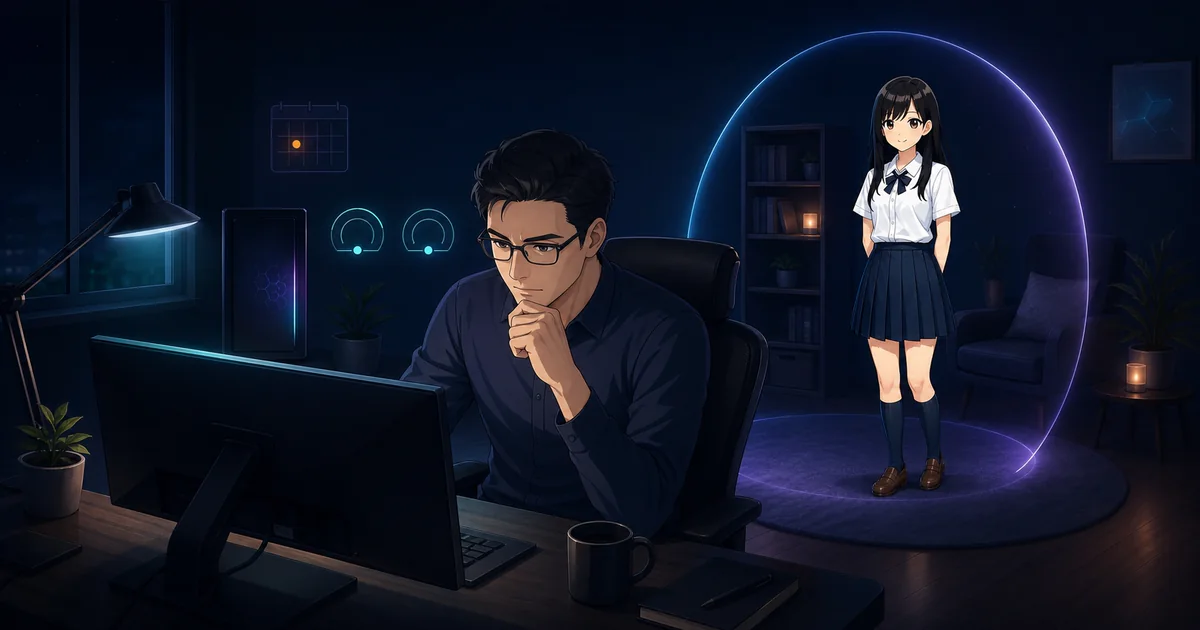
The export is halfway done, the video call starts in four minutes, and Task Manager says the AI companion is still holding a large local model in memory. You are not talking to it. It is simply there, competing with the work that actually needs the machine.
Cloud assistants hide this problem in somebody else’s data centre. A private, local companion cannot. Its model runs on your CPU or GPU and lives in your RAM while loaded. That is the price of keeping the prompt, the remembered context, and the answer on your hardware.
It does not follow that the companion should treat your workstation as its own.
Giving the machine back
DT Life has three performance modes because “fastest answer” is not the same request on every computer.
Balanced, the default, limits how many processor threads local generation and prompt reading may take, keeps only the smaller embedding stack warm, and unloads an unused language model after 20 minutes. Eco uses fewer threads, preloads nothing, and unloads the model after five idle minutes. Full power lets the engine choose its normal thread count and keeps the language model loaded.
Balanced and Eco can also step aside when system memory is under pressure. They do not stop the engine halfway through a reply: the model must be unused before the app releases it. Voice, OCR, and embedding caches can be dropped as well, and there is a manual release control when you want the memory back now.
Nothing is deleted. The models remain on disk and reload when a feature needs them again. That distinction matters: releasing memory costs time on the next request, not capability or personal data.
Giving your attention back
There is another resource an assistant can waste more easily than RAM: a minute in which you were concentrating.
DT Life’s proactive reminders are built from stored commitments, calendar events, and the observed rhythm you chose to let it see. During a Presence quiet focus block, ordinary briefings, recaps, and follow-up questions wait rather than placing a bubble over the task. Imminent meeting preparation is the exception, because a warning ten minutes before a meeting is useful only before the meeting.
Waiting is not dropping. A follow-up can remain queued behind a focus block and be shown later. Each proactive moment is keyed so restarting the app or planning it again does not make it repeat. If you do not want proactive speech at all, the reminders master switch disables planning and delivery, including follow-up questions.
That is a small but important model of consent. “You installed an assistant” does not mean “the assistant owns every quiet moment.”
The limit is physical
No setting makes local inference free. While DT Life is actively composing a reply, it needs compute. Eco mode may preserve more headroom for other work, but it can make replies slower. Unloading after idle time reduces resident memory, but the next question waits while the model starts again. Full power can feel quicker precisely because it keeps more of your machine ready for the companion.
Nor can focus detection know the meaning of every moment. It works from the local activity rhythm and rules available to it, not from access to your thoughts. A meeting warning may still arrive when you would rather not see it, and an unobserved focus session may not be recognised. The controls remain necessary because prediction is not permission.
The useful standard is not “uses zero resources” or “never interrupts.” It is whether the user can see the trade, choose a mode, turn proactivity off, and get the machine back without losing their work. A companion should be present when invited and light enough to become background when it is not.